
UPDATE: We have a new YouTube channel. Please CLICK HERE to visit and subscribe to it for video lessons.
This will be the last lesson that deals with the letters of the Akan (Twi) alphabet and their accompanying sounds.
Our last lesson looked at the sounds that are formed by the combination of two vowel sounds in individual syllables. You may click Twi Diphthongs|Vowel Combinations to check it out.
Today’s lesson focuses on the a, e, and o vowels of the Akan (Twi) alphabet. When speaking, each of these vowels may be realised in two sound forms. The objective of this lesson, thus, is to introduce you to all the sound forms to help you get your pronunciation basics right.
You may watch the embedded video below (highly recommended) to hear how each of the sounds is produced, and to practice along. But, if you came solely for the text version of the lesson, continue reading beneath the video.
Video Lesson
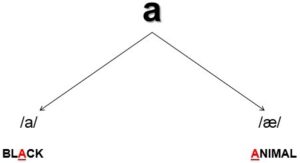
The vowel ‘a’ may be realised as the regular /a/ sound that you find in the English word BLACK, or as /æ/ as in the English word ANIMAL.
Some examples:
as /a/
| Twi | English |
|---|---|
| anomaa | bird |
| adaka | box |
| akokɔ | fowl (cock/hen) |
| ankaa | orange |
| adanko | rabbit |
as /æ/
| Twi | Transcription | English |
|---|---|---|
| barima | /bærima/ | male/man |
| aduane | /æduane/ | food |
| ani | /æni/ | eye (noun) |
| baabi | /bææbi/ | somewhere |
| aburoo | /æburoo/ | maize |

The vowel ‘e’ can also be realised as the /e/ sound that you find in the English word EIGHT, or as the /ɪ/ sound that you find in the English word PIT. Let’s look at some examples of Twi words containing these sounds.
as /e/
| Twi | English |
|---|---|
| edin | name (noun) |
| esum | darkness |
| esie | (ant)hill |
| keteke | train (vehicle) |
| efie | home |
as /ɪ/
| Twi | Transcription | English |
|---|---|---|
| ketewa | /kɪtɪwa/ | small |
| tenten | /tɪntɪn/ | tall/long |
| sensene | /sɪnsɪnɪ/ | peel (verb) |
| sere | /sɪrɪ/ | laugh (verb) |
| kenkan | /kɪnkan/ | read (verb) |

Lastly, the ‘o’ vowel may be realised as the regular /o/ sound that you find in the English word POTENT, or as the /ʊ/ sound that you find in the English word PUT. Let’s look at the sets of Twi word examples containing both sounds.
as /o/
| Twi | English |
|---|---|
| koko | porridge |
| afuo | farm (noun) |
| abufuo | anger (noun) |
| tuo | gun (noun) |
| aduro | medicine |
as /ʊ/
| Twi | Transcription | English |
|---|---|---|
| soronko | /sʊrʊnkʊ/ | unique |
| poma | /pʊma/ | walking stick |
| adanko | /adankʊ/ | rabbit |
| foro | /fʊrʊ/ | climb (verb) |
| pono | /pʊnʊ/ | door |
It must be noted that the /æ/, /ɪ/, /ʊ/ variants are only realised when speaking and not written in standard Twi. So, when writing, these sounds are to be represented by the letters ‘a’, ‘i’, and ‘o’ respectively.
Secondly, the choice of either of the sound variants in a word is not arbitrary. It follows a systematic rule captured under what is known as Vowel Harmony. This will be discussed in a later post.
And with this, you have successfully completed yet another grammar lesson. Please subscribe to the website by entering your name and email address in the form below. If you have any question, ask away in the comments section below. Thank you for reading.

Responses